
NFL
The Mayor of San Francisco has signed a reparations bill, saying he wants to be the first white elected official to formally push for compensation to Black Americans for the lasting damage of slavery. However, the city doesn’t have the funds to cover the plan on its own. The mayor is now urging Congress to step in and help finance the program. His proposal aims to provide up to $5 million per eligible Black resident, arguing that the payment could be a starting point toward healing the historical trauma and injustice caused by slavery. (Debate online is already heated, with supporters calling it overdue accountability — and critics questioning feasibility and fairness.

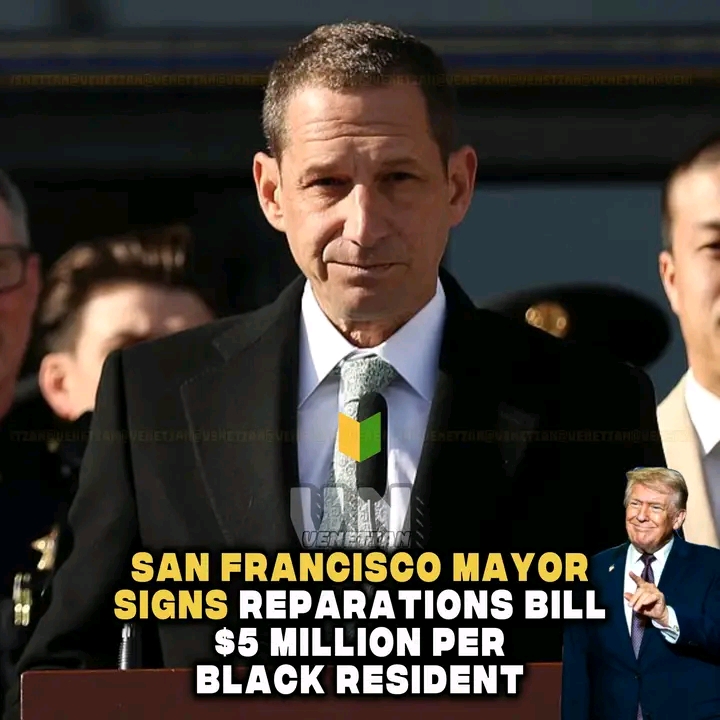
SAN FRANCISCO – Mayor Daniel Lurie has signed an ordinance establishing a reparations fund for Black residents in San Francisco, a move supporters say acknowledges historic harm. Critics argue it is unnecessary, legally questionable and potentially costly, even without city funding.
Reparations for Black SF residents
The measure, which passed the Board of Supervisors unanimously on December 16, establishes a fund for reparations for Black residents who can demonstrate they experienced a proven harm in San Francisco.
Lurie signed the ordinance into law last week without a public announcement, press release or social media post.
In a statement, the mayor emphasized the city’s fiscal constraints:
“I was elected to drive San Francisco’s recovery, and that’s what I’m focused on every day. We are not allocating money to this fund — with a historic $1 billion budget deficit, we are going to spend our money on making the city safer and cleaner.”
Supporters say the ordinance represents an important acknowledgment of the city’s role in historic injustices against Black residents.
What they’re saying:
“I would argue that the city is accountable for not just investing in this fund, but for supporting in all the ways possible the recommendations of our plan, including financial repair,” said Eric McDonnell, former chair of the African American Reparations Advisory Committee. “It is a step in the right direction. It by no means demonstrates or represents a full on commitment to making something happen.”
McDonnell’s committee, which concluded its work in early 2024 after a three-year term, produced a more than 400-page report in 2023 with over 100 recommendations aimed at addressing historic harms, including housing displacement, discriminatory policies and economic exclusion.
Among those recommendations was a proposal for a one-time, $5 million payment to each eligible person.
McDonnell said eligibility under the committee’s recommendations would be based on documented harm.
“I’m making this up, but if I can demonstrate that in 1972 the property my family owned was taken by eminent domain and I am therefore due repair for that, then I’d be eligible,” he said.
Lurie has said the fund is open to private donations and that if money becomes available, the city would ensure it is distributed to eligible recipients.
Some criticism
Critics, however, say the measure raises serious concerns even without direct payouts.
Conservative columnist and political commentator Richie Greenberg said the ordinance could still cost taxpayers money by requiring the city to set up a new bureaucracy and defend potential legal challenges.
“When I learned that he signed this – disillusionment, disappointment,” Greenberg said. “I had hoped that he would have said, you know, this is something that we don’t need at this point.”
Greenberg also questioned whether accepting private donations through city coffers is appropriate and warned the policy could expose the city to lawsuits.
“Even though it is true that there were injustices in the 1940s, 50s and 60s against the city’s African American population, that does not mean individual taxpayers 20, 30, 50 years later should be held responsible,” he said.
McDonnell said former members of the reparations advisory committee continue to meet informally to advocate for funding and to hold the city accountable for implementing broader recommendations outlined in the report.

SHOCKING LIVE TV MOMENT FROM NINERS: “HE’S JUST A FOOTBALL PLAYER, HE’S JUST A FOOTBALL PLAYER, THE ONE WHO GOT HIS TEAM ELIMINATED FROM THE PLAYOFFS

One sentence was all it took to spark global outrage. Elon Musk faced intense backlash after publicly calling his transgender daughter his “mentally ill son.” The comment quickly went viral, with people across social media condemning both the language he used and the dismissive tone behind it.

2 BILLION VIEWS — ELON MUSK & ERIKA KIRK JUST BROKE THE INTERNET! The debut of “The Charlie Kirk Show” didn’t just premiere — it exploded. Elon Musk said something that left Erika Kirk speechless… and what happened next has the internet on fire. 👀 Fans are calling it “the most important conversation of the decade”, but it’s what Musk whispered off-camera that has everyone talking — and no one was supposed to hear it. More details can be found in the comments

“YOU NEED TO BE SILENT!” — Joy Behar’s Attack on Kid Rock EXPLODES Online After He Reads Every Word on Live TV… and the Studio Falls DEAD SILENT.

UPDATED SHOCK: After a recent health scare, Elon Musk confessed, “I’m not afraid of death, but of unfinished work.” He spoke of time lost with family, missions unfinished, and a quiet regret—moving millions to tears, craving the full story worldwide. 👉READ MORE:

“Serena Williams and Her 4-Year-Old ‘Mini Me’ Olympia Go Head-to-Head on the Tennis Court in Adorable Matching Outfits—Who Wins?” 👉👉:

Why Trump is Starmer’s worst nightmare

The Mayor of San Francisco has signed a reparations bill, saying he wants to be the first white elected official to formally push for compensation to Black Americans for the lasting damage of slavery. However, the city doesn’t have the funds to cover the plan on its own. The mayor is now urging Congress to step in and help finance the program. His proposal aims to provide up to $5 million per eligible Black resident, arguing that the payment could be a starting point toward healing the historical trauma and injustice caused by slavery. (Debate online is already heated, with supporters calling it overdue accountability — and critics questioning feasibility and fairness.

NEWS: Republicans brace for massive rebuke of Trump this week. A major attack on media as the Corporation of Public Broadcasting shuts down.
Heartbreaking Farewell: Travis Kelce Leaves Fans in Tears

Joe Rogan’s Skeptical Remarks Fuel Intense Speculation Over Erika Kirk in Charlie Kirk Assassination Mystery Joe Rogan’s piercing words of doubt about Erika Kirk sent the internet into overdrive, dissecting her every gesture as proof of orchestration in the wake of Charlie Kirk’s public execution. Theories exploded over timelines, evidence gaps, and her rapid rise to leadership, painting forgiveness as performance. Erika’s deliberate silence evolved into a defiant stand, proving restraint more powerful than rage. Feel the intensity of this cultural firestorm—head to the comments for the in-depth revelations promising insight into true power amid pain.
