
NFL
Joe Rogan’s Skeptical Remarks Fuel Intense Speculation Over Erika Kirk in Charlie Kirk Assassination Mystery Joe Rogan’s piercing words of doubt about Erika Kirk sent the internet into overdrive, dissecting her every gesture as proof of orchestration in the wake of Charlie Kirk’s public execution. Theories exploded over timelines, evidence gaps, and her rapid rise to leadership, painting forgiveness as performance. Erika’s deliberate silence evolved into a defiant stand, proving restraint more powerful than rage. Feel the intensity of this cultural firestorm—head to the comments for the in-depth revelations promising insight into true power amid pain.

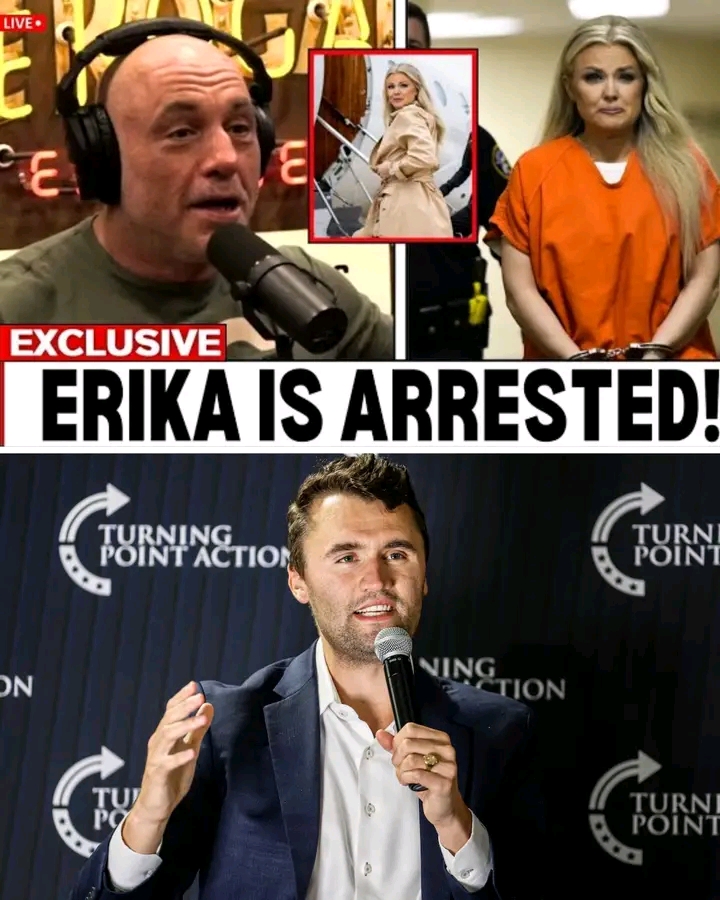
The assassination of Charlie Kirk on September 10, 2025, at Utah Valley University stands as a pivotal moment in America’s ongoing struggle with political violence. The 31-year-old co-founder of Turning Point USA, a tireless advocate for conservative values among young people and a close ally of President Trump, was addressing a packed outdoor event when a single shot from a rooftop sniper ended his life. Accused shooter Tyler Robinson, a 22-year-old from southern Utah, faces aggravated murder charges, with prosecutors seeking the death penalty amid what they describe as overwhelming evidence, including DNA, fingerprints, and incriminating texts.
Yet, three months later, as Robinson made his first in-person court appearance in December, the case remains shrouded in controversy. Public fascination has shifted from the legal proceedings to a barrage of online theories questioning the official narrative—and, uncomfortably, the behavior of Kirk’s widow, Erika. What began as grief has morphed into a spectacle, amplified by influential voices like Joe Rogan, whose podcast comments have poured fuel on the fire of doubt.
Rogan, known for his measured, curiosity-driven style, didn’t make direct accusations. In episodes touching on the tragedy, he highlighted “weird stuff”—mismatched rifle descriptions, rapid suspect identification, and recurring figures in high-profile incidents. His calm skepticism resonated deeply, turning vague inconsistencies into rallying points for amateur investigators. Clips spread virally, with listeners interpreting his pauses as profound insight.
Erika Kirk, thrust into leadership as Turning Point USA’s new CEO, became an unwitting focal point. Her composure—delivering speeches, vowing to expand the organization “10 times greater,” and expressing biblical forgiveness toward the accused—struck some as inspirational resilience. To others, it appeared too polished, too swift. Critics labeled her public appearances “performances,” her faith a “costume,” and her quick embrace of Charlie’s mission as opportunistic.
Social media dissected everything: outfits deemed inappropriate for mourning, smiles seen as insensitive, pauses in speeches as calculated. Old clips resurfaced, reframed suspiciously. Her forgiveness statement—”I forgive him,” echoing Christ’s words—drew applause from supporters but scorn from skeptics viewing it as scripted PR. Rumors swirled about pre-planned leadership transitions, international ties, and even staged elements of the event itself.
The frenzy peaked with claims of hidden footage, altered evidence, and broader conspiracies tying the assassination to political shifts or donor disputes. Rogan’s remarks, never naming Erika directly, were woven into narratives portraying her silence or statements as evasive. Her choice to limit responses only intensified scrutiny—silence read as strategy, not sorrow.
Erika broke through briefly with a simple video: “Enough.” Seated plainly, she affirmed Charlie’s mission would endure, his voice living on. No defensiveness, no naming critics—just quiet determination. It garnered millions of views, shifting sentiment for many. Supporters praised her grace; even some doubters acknowledged her poise. She later shared grief has no roadmap, urging empathy amid judgment.
Rogan remained silent on follow-ups, his initial comments lingering as catalysts. The divide deepened: one camp seeing legitimate questions in a high-profile case, another viewing it as cruel harassment of a grieving family.
Erika has advocated for courtroom transparency, pushing for cameras to combat misinformation: “There were cameras all over my husband when he was murdered.” As CEO, she’s navigated Turning Point’s growth, honoring Charlie while raising their young children. Her temporary step-back from some duties reflects the toll, yet her resolve endures.
This episode mirrors broader tensions. Kirk’s death prompted national mourning—flags lowered, memorials erected—and swift backlash against those celebrating online, with hundreds facing consequences. It reignited fears of escalating violence, echoing prior attempts on public figures.
Rogan’s influence underscores podcast power in shaping discourse, planting seeds that bloom into forests of speculation. His audience, drawn to unfiltered inquiry, amplified discrepancies without resolution.
Ultimately, facts anchor the case: Robinson’s surrender, forensic matches, planned attack allegations. Federal hate crime considerations explore motives tied to Kirk’s faith-based advocacy. Yet online echo chambers thrive on ambiguity, turning tragedy into endless debate.
Erika’s path forward embodies quiet strength. Protecting privacy while leading boldly, she focuses on legacy—youth empowerment, debate, conservatism. Her forgiveness, radical in its authenticity, challenges a polarized era.
As hearings continue into 2026, justice demands evidence over conjecture. Charlie Kirk’s voice, silenced violently, echoes in movements he built. Erika ensures it amplifies, proving resilience outlasts rumor. In a noisy world, her measured approach reminds us: truth emerges not in outrage, but patience—and humanity deserves space to heal.Rogan’s influence underscores podcast power in shaping discourse, planting seeds that bloom into forests of speculation. His audience, drawn to unfiltered inquiry, amplified discrepancies without resolution.
Ultimately, facts anchor the case: Robinson’s surrender, forensic matches, planned attack allegations. Federal hate crime considerations explore motives tied to Kirk’s faith-based advocacy. Yet online echo chambers thrive on ambiguity, turning tragedy into endless debate.
Erika’s path forward embodies quiet strength. Protecting privacy while leading boldly, she focuses on legacy—youth empowerment, debate, conservatism. Her forgiveness, radical in its authenticity, challenges a polarized era.
As hearings continue into 2026, justice demands evidence over conjecture. Charlie Kirk’s voice, silenced violently, echoes in movements he built. Erika ensures it amplifies, proving resilience outlasts rumor. In a noisy world, her measured approach reminds us: truth emerges not in outrage, but patience—and humanity deserves space to heal.

SHOCKING LIVE TV MOMENT FROM NINERS: “HE’S JUST A FOOTBALL PLAYER, HE’S JUST A FOOTBALL PLAYER, THE ONE WHO GOT HIS TEAM ELIMINATED FROM THE PLAYOFFS

One sentence was all it took to spark global outrage. Elon Musk faced intense backlash after publicly calling his transgender daughter his “mentally ill son.” The comment quickly went viral, with people across social media condemning both the language he used and the dismissive tone behind it.

2 BILLION VIEWS — ELON MUSK & ERIKA KIRK JUST BROKE THE INTERNET! The debut of “The Charlie Kirk Show” didn’t just premiere — it exploded. Elon Musk said something that left Erika Kirk speechless… and what happened next has the internet on fire. 👀 Fans are calling it “the most important conversation of the decade”, but it’s what Musk whispered off-camera that has everyone talking — and no one was supposed to hear it. More details can be found in the comments

“YOU NEED TO BE SILENT!” — Joy Behar’s Attack on Kid Rock EXPLODES Online After He Reads Every Word on Live TV… and the Studio Falls DEAD SILENT.

UPDATED SHOCK: After a recent health scare, Elon Musk confessed, “I’m not afraid of death, but of unfinished work.” He spoke of time lost with family, missions unfinished, and a quiet regret—moving millions to tears, craving the full story worldwide. 👉READ MORE:

“Serena Williams and Her 4-Year-Old ‘Mini Me’ Olympia Go Head-to-Head on the Tennis Court in Adorable Matching Outfits—Who Wins?” 👉👉:

Why Trump is Starmer’s worst nightmare

The Mayor of San Francisco has signed a reparations bill, saying he wants to be the first white elected official to formally push for compensation to Black Americans for the lasting damage of slavery. However, the city doesn’t have the funds to cover the plan on its own. The mayor is now urging Congress to step in and help finance the program. His proposal aims to provide up to $5 million per eligible Black resident, arguing that the payment could be a starting point toward healing the historical trauma and injustice caused by slavery. (Debate online is already heated, with supporters calling it overdue accountability — and critics questioning feasibility and fairness.

NEWS: Republicans brace for massive rebuke of Trump this week. A major attack on media as the Corporation of Public Broadcasting shuts down.
Heartbreaking Farewell: Travis Kelce Leaves Fans in Tears

Joe Rogan’s Skeptical Remarks Fuel Intense Speculation Over Erika Kirk in Charlie Kirk Assassination Mystery Joe Rogan’s piercing words of doubt about Erika Kirk sent the internet into overdrive, dissecting her every gesture as proof of orchestration in the wake of Charlie Kirk’s public execution. Theories exploded over timelines, evidence gaps, and her rapid rise to leadership, painting forgiveness as performance. Erika’s deliberate silence evolved into a defiant stand, proving restraint more powerful than rage. Feel the intensity of this cultural firestorm—head to the comments for the in-depth revelations promising insight into true power amid pain.
