
NFL
10 minutes ago: American football legend Tom Brady has just spoken out in defense of Patrick Mahomes and issued a harsh warning to critics, without reservation: “I hope Patrick makes a strong recovery and continues to reach the peak we all know he can. But the keyboard warriors, the idiots who are rushing to bury him just because of one injury season – shut up immediately!” Not stopping there, Brady also frankly criticized forcing Mahomes back too soon: “Pushing him into a crazy rehab schedule just to satisfy the noisy crowd is the stupidest thing to do. If he doesn’t manage his health properly, the consequences will be dire – and then don’t blame anyone but those who were yelling for him to play immediately.” Brady shared his anger on the Let’s Go! podcast. Patrick Mahomes immediately reposted the interview with an emotional message that made the seven-time Super Bowl champion silently nod in satisfaction.

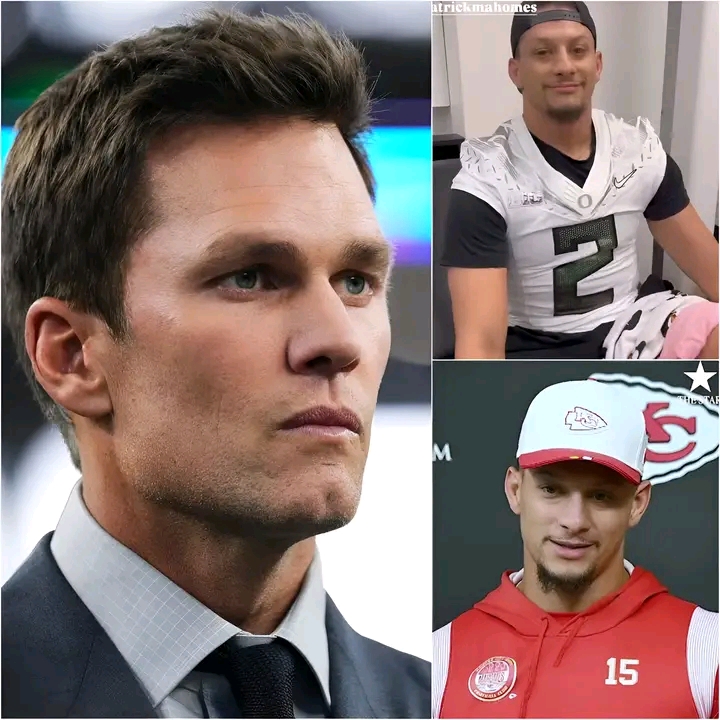
The football world jolted when Tom Brady broke his usual restraint, speaking with rare fury in defense of Patrick Mahomes. Just minutes after the remarks surfaced, fans realized this was not a polite endorsement, but a blunt warning aimed directly at Mahomes’ loudest critics.
Brady’s comments came during an episode of the Let’s Go! podcast, where his tone shifted noticeably. Gone was the measured analysis. In its place stood raw frustration, shaped by years of experience navigating injuries, expectations, and relentless public judgment.
“I hope Patrick makes a strong recovery and continues to reach the peak we all know he can,” Brady said. The praise was immediate, but it quickly transformed into confrontation as he addressed those questioning Mahomes’ future.
Brady did not soften his language. He targeted what he called “keyboard warriors,” accusing them of rushing to bury Mahomes after a single injury-affected season, dismissing their opinions as ignorant and dangerously short-sighted.
His message was unambiguous. One difficult year, especially marked by physical setbacks, does not erase greatness. Brady emphasized that true evaluation demands patience, perspective, and respect for the physical toll of elite football.
The seven-time Super Bowl champion then turned his criticism toward a deeper issue. He condemned the pressure placed on injured stars to accelerate recovery, warning that rushing rehabilitation to satisfy fans often leads to long-term damage.
“Pushing him into a crazy rehab schedule just to satisfy the noisy crowd is the stupidest thing to do,” Brady said. His words reflected not theory, but lived experience shaped by decades of playing through pain.
Brady stressed that improper health management carries irreversible consequences. When careers derail due to rushed returns, blame rarely falls on those who demanded immediate action, despite their role in fueling unrealistic expectations
The podcast segment spread rapidly across social media, igniting debate within minutes. Fans shared clips, analysts dissected every phrase, and former players weighed in, many aligning themselves firmly with Brady’s stance.
For Mahomes, the reaction was deeply personal. Almost immediately, he reposted the interview, adding an emotional message that signaled gratitude, understanding, and quiet validation from one of the game’s greatest figures.
Though Mahomes’ message was brief, its impact was profound. It suggested relief in being defended not by anonymous supporters, but by a legend who understands the psychological weight carried by franchise quarterbacks.
Observers noted Brady’s visible satisfaction upon seeing Mahomes’ response. Those close to the show described a silent nod, the kind shared between athletes who recognize shared battles beyond statistics and trophies.
The exchange reframed the ongoing narrative around Mahomes’ injury season. Instead of decline, the focus shifted to recovery, longevity, and the responsibility surrounding generational talent management.
Brady’s intervention carried unique authority. Having endured skepticism, injuries, and calls for retirement himself, his defense resonated as more than opinion—it was a warning forged through hard-earned survival.
Across NFL circles, players quietly expressed appreciation. Many admitted they feared speaking openly about pressure to return too soon, knowing criticism often follows those who prioritize health over immediate performance.
The incident also reignited debate about fan culture. While passion fuels the sport, Brady’s remarks highlighted how entitlement can morph into harmful demands disconnected from athletic reality.
Analysts began comparing Mahomes’ situation to past stars whose careers suffered due to premature returns. The cautionary examples lent weight to Brady’s argument, reinforcing the cost of impatience.
Coaches and medical professionals echoed similar sentiments, emphasizing that rehabilitation timelines are complex, individualized, and incompatible with public impatience driven by weekly expectations.
Brady’s comments also challenged media narratives. He implied that constant speculation and dramatic framing amplify pressure, subtly encouraging reckless decisions in pursuit of headlines and short-term engagement.
Mahomes’ season, once framed as disappointment, now appeared transitional. Injuries disrupt rhythm, confidence, and mechanics, but they do not erase intelligence, leadership, or long-term potential.
Fans who initially criticized Mahomes began reassessing their positions. Brady’s words forced reflection, prompting many to acknowledge how quickly admiration can turn into unforgiving scrutiny.
The exchange underscored an unspoken bond among elite quarterbacks. Despite competition, they share understanding of isolation, responsibility, and the relentless microscope that defines their careers.
For younger players, Brady’s defense carried educational value. It demonstrated that protecting one’s body is not weakness, but strategy, especially in a league that consumes talent without pause.
Mahomes’ repost was interpreted as both gratitude and resolve. It suggested he intends to recover on his own terms, prioritizing longevity over appeasing critics eager for instant gratification.
The timing of Brady’s comments mattered. Delivered amid heightened debate, they acted as a circuit breaker, slowing reactionary narratives before they hardened into permanent judgments.
Within hours, the story dominated sports discourse. Not because of controversy, but because it exposed uncomfortable truths about how quickly greatness is questioned when vulnerability appears.
Brady’s anger felt protective, almost paternal. It reminded audiences that legends are not built through constant availability, but through resilience sustained across years, not weeks.
As discussions continue, Mahomes’ recovery remains the central focus. Brady’s warning lingers, urging patience, empathy, and restraint in a culture conditioned to demand immediate redemption.
Ultimately, this moment was less about defense and more about responsibility. Responsibility of fans, media, and organizations to value human longevity over fleeting satisfaction.
Brady did not just defend Mahomes. He challenged the system surrounding him. And in doing so, he reminded the football world that greatness deserves time, not pressure-driven impatience.

Jasmine Crockett’s Dangerous Rhetoric: Comparing Trump to Maduro is a Disservice to America

BREAKING NEWS: Patrick Mahomes Fires Back After On-Air Insult — “You Will Never Touch My Character.”

King Charles reportedly told Harry he was “not a bank” after the Duke of Sussex “demanded funds.” Learn more, here. Click the link below ⬇️

The U.S. State Department, under a directive signed by Trump, now prohibits the display of non-national flags, including Pride and Black Lives Matter symbols, at federal and diplomatic buildings globally. The new policy reverses previous practices that allowed such flags at embassies. U.S. personnel found in violation of this rule will face disciplinary actions, underscoring the administration’s firm stance on enforcing the change.

10 minutes ago: American football legend Tom Brady has just spoken out in defense of Patrick Mahomes and issued a harsh warning to critics, without reservation: “I hope Patrick makes a strong recovery and continues to reach the peak we all know he can. But the keyboard warriors, the idiots who are rushing to bury him just because of one injury season – shut up immediately!” Not stopping there, Brady also frankly criticized forcing Mahomes back too soon: “Pushing him into a crazy rehab schedule just to satisfy the noisy crowd is the stupidest thing to do. If he doesn’t manage his health properly, the consequences will be dire – and then don’t blame anyone but those who were yelling for him to play immediately.” Brady shared his anger on the Let’s Go! podcast. Patrick Mahomes immediately reposted the interview with an emotional message that made the seven-time Super Bowl champion silently nod in satisfaction.

“TRUMP HAS DECLARED WAR ON RUSSIA”

‘Our gratitude’: Moscow says US to release two Russian crew members from seized oil tanker; move after request to Trump

NEWS: Special Counsel Jack Smith will testify publicly in front of the House Judiciary Committee, per Politico. The public will hear the evidence Smith had against President Trump.

AOC accuses Fox’s Jesse Watters of sexually harassing her in explosive confrontation with producer

The silence shattered fifteen minutes ago. Elon Musk just dropped a comeback that stunned the world. After months of relentless scrutiny, lawsuits, and public doubt, he’s back—bigger and bolder. Investors held their breath. Social feeds exploded. Supporters cheered resilience. Critics braced for chaos. Markets shifted in real time. One thing is undeniable: Musk isn’t finished. He’s still shaping tomorrow, on his terms, and the world can’t look away. 👉READ MORE:

““SHUT UP AND KEEP YOUR MOUTH SHUT!” MICHELLE O.B.A.M.A exploded on X demanding JESSE WATTERS be silenced forever — but the vicious att@ck backfired catastrophically when he calmly stepped onto live national television and read every single word of her post out loud. No insults. Just ice-cold logic and terrifying composure. What followed became one of the most polite yet merciless takedowns ever aired, instantly transforming a routine talk show into a cultural flashpoint — forcing the entire United States to confront an uncomfortable truth in real time. Hollywood has rarely seen destruction this elegant — or this devastating. Details in the comments”
